

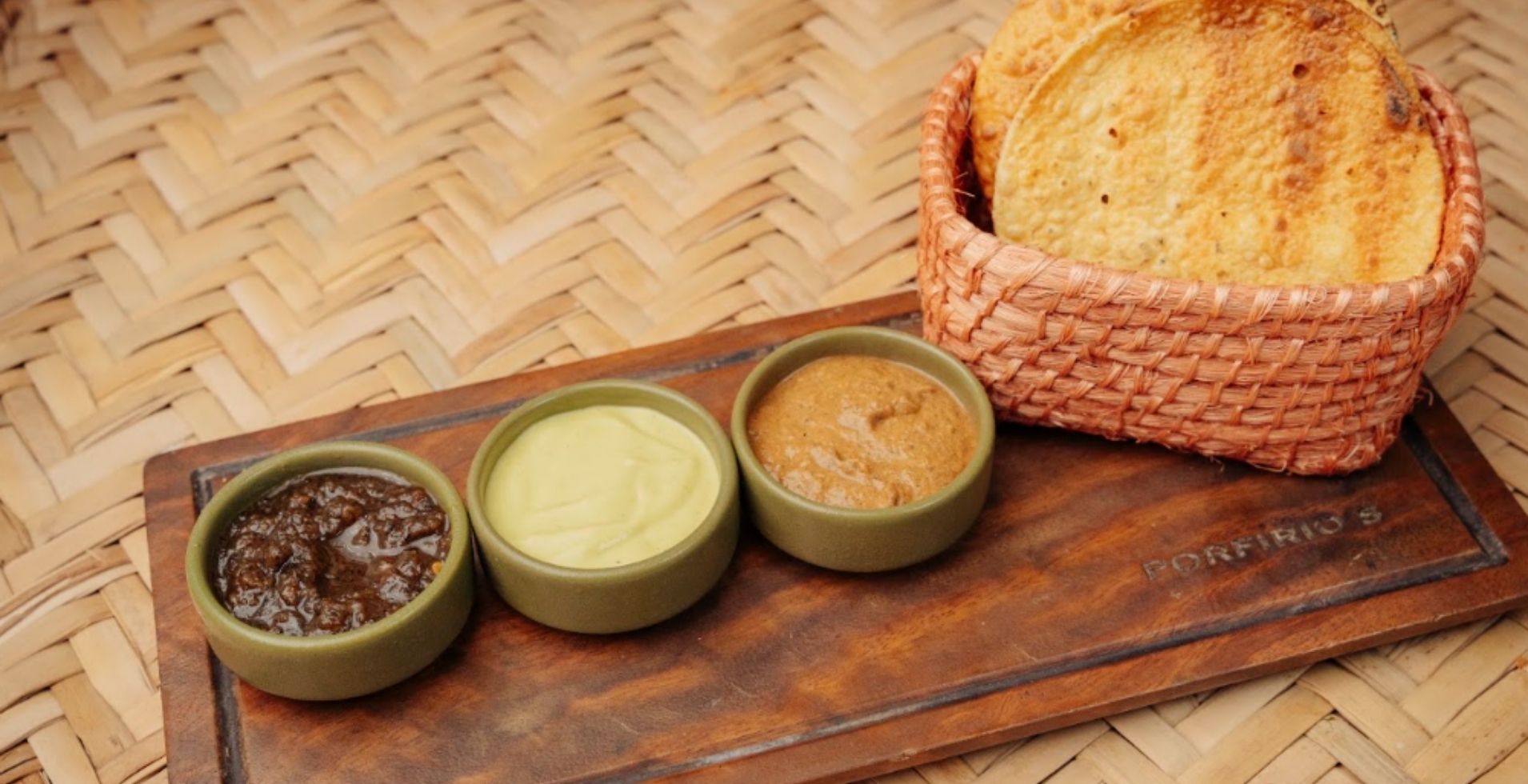
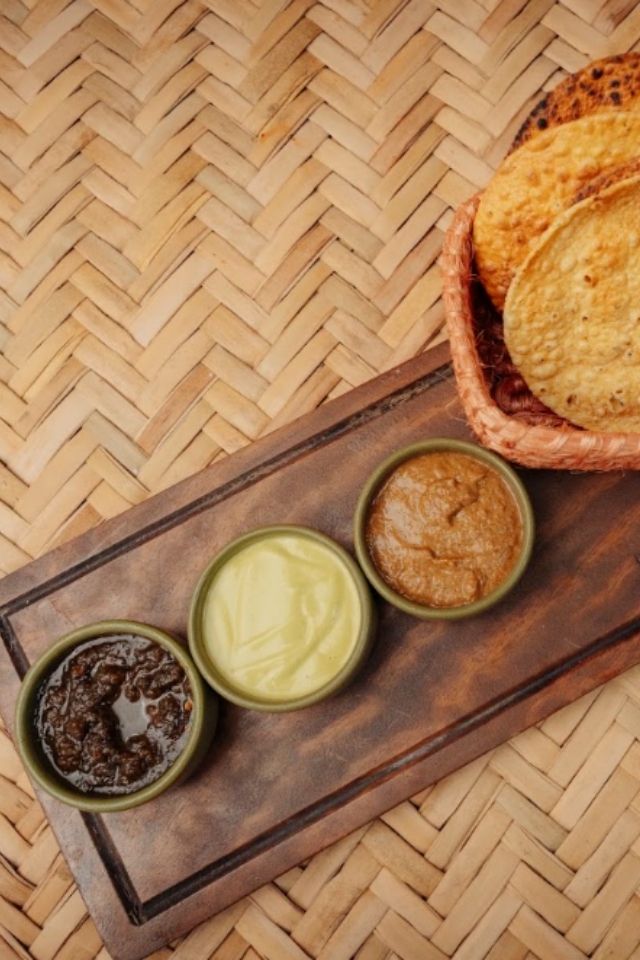
If Mexican cuisine had to be summarized in a single element, many would choose salsa. At Porfirio’s, salsas are not merely an accompaniment; in many dishes, they are the primary reason why every bite tastes unique.
The salsa that appears more often than you might think
The salsa verde tatemada (charred green salsa)—found in the New York Asadito a la Piedra—and the standard salsa verde—featured in the Crispy Pork Belly Gorditas and the Sábana de Res—demonstrate that not all “green salsas” are alike, even if they share the same name and color.
When the salsa bears the name of the technique
The salsa zarandeada—present in the Salmón Zarandeado, the Salmon and Tuna Tower with Mango, and the New York *Aguachile*—refers to a coastal cooking technique; its presence across various dishes links them all to that same culinary tradition.
The salsa that dares to do more
Salsa macha—featured in the Charcoal-Grilled Totoaba—offers a more intense flavor profile, combining nuts, chilies, and oil. It proves that not all salsas aim for freshness; some seek depth and a lingering presence on the palate.
Mole: the salsa that is practically a dish in its own right
Mole—found in the Oaxaca cocktail, the Oaxacan Enmoladas, and the Beef Fillet in Ancestral Black Mole—is perhaps the clearest example of a salsa that transcends its own category, appearing in both main courses and at the mixology bar.
A flavor map, not just a side dish
Tracing the salsas across the menu offers a unique way to explore the entire selection: each one tells a different story, and together, they define a significant part of the cuisine’s identity.
