
A Mexican menu can be written in Spanish and still need translating. Some words make even people who grew up eating those dishes hesitate. They aren’t decoration: each one describes a technique or an origin, and understanding them helps you order better.
Fire Techniques
Tatemado: roasted directly over fire or on a comal until the skin blackens in spots. It isn’t burning: it’s about reaching a toasted, smoky point. It appears in the tatemada green salsa of the New York Asadito a la Piedra and in the ranchera salsa of the Chile Relleno de Dos Quesos.
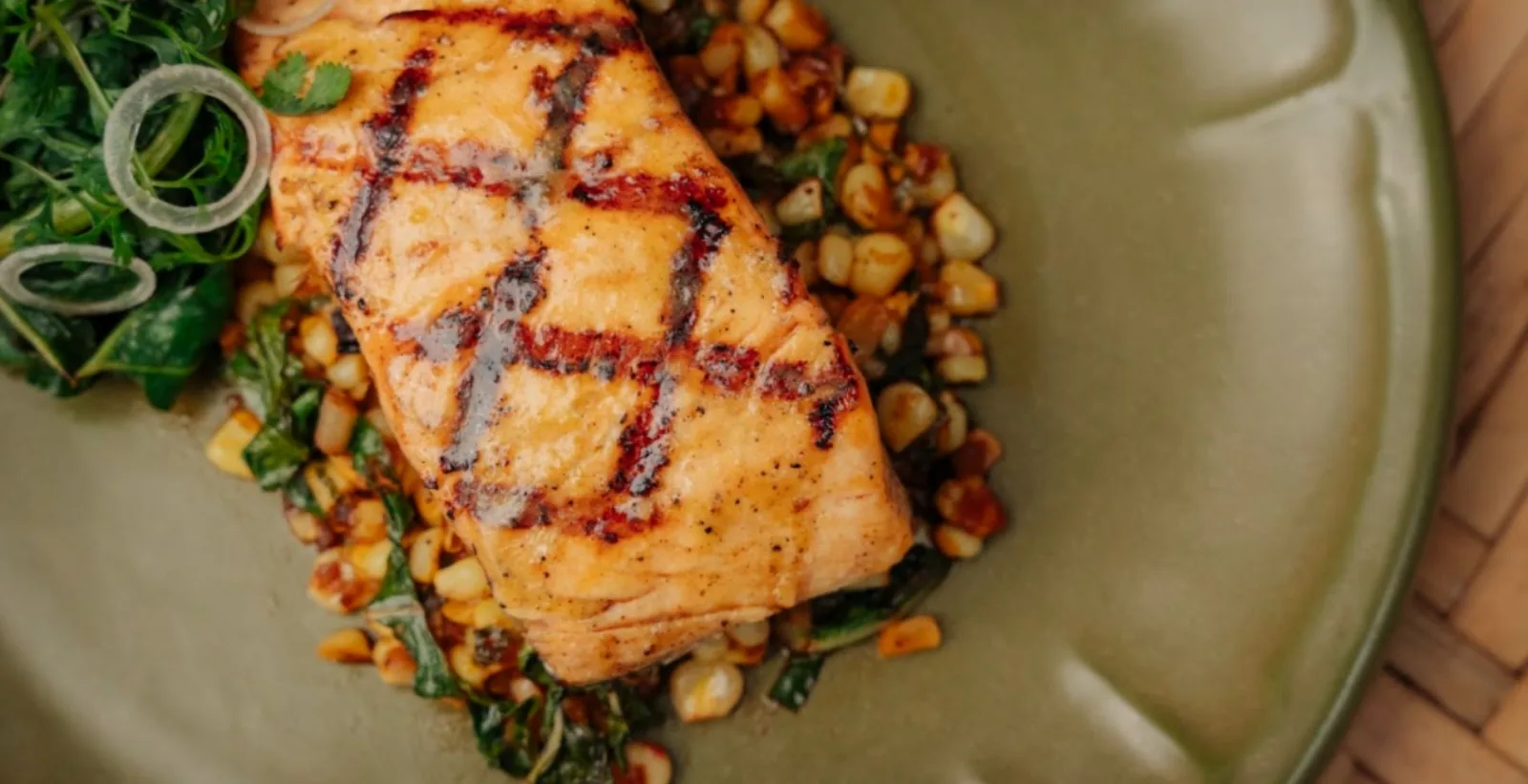
Zarandeado: a Pacific technique associated with Nayarit and Sinaloa. The fish is grilled over embers in a double rack, turned constantly. It’s in the Salmón Zarandeado, and the zarandeada salsa appears in the Torre de Salmón y Atún, the New York Aguachile and the Totoaba al Carbón.
A las brasas and al carbón: cooking over lit charcoal, with a smokiness the griddle can’t match. Octopus, Lobster, Totoaba, Avocado and Picaña all go through it.
Flameado: a spirit is added to a hot preparation and set alight. The alcohol burns off and the aroma remains. On the menu, dishes are flambéed with mezcal and tequila.
Textures and Preparations
Martajado: coarsely ground, with visible pieces, as in a molcajete. It’s the martajada tomato salsa of the New York Asadito.
Capeado: coated in egg beaten to stiff peaks and fried, forming a fluffy layer. It’s the technique behind the Chile Relleno de Dos Quesos.
Al ajillo: with garlic cooked in oil or butter. The Quesadilla de Hongos al Ajillo has it.
Ahogado: generously drenched in sauce, like the Flautas de Pollo Ahogadas in green salsa.
Gaonera: a taco of thin steak, seared quickly, very much from Mexico City. Its name is usually linked to the bullfighter Rodolfo Gaona.
Ingredients with Their Own Names
Tortilla sobaquera: a huge, thin flour tortilla, typical of Sonora. It comes with the Queso Fundido Natural.
Maíz criollo: native varieties of corn, with more diverse colors and flavors. It’s used to make the handmade tortillas that come with the Arrachera, the Sábana de Res and Doña Anita’s Meatballs.
Quesillo: the Oaxacan name for Oaxaca cheese, the stringy kind. It goes in the Quesadilla de Hongos.
Escamoles, chapulines and chicatanas: ant larvae, toasted grasshoppers and rainy-season ants. They appear in the Huarache de Rib Eye, the Caña de Filete and the Oaxaca cocktail.
Tuétano: beef bone marrow, spreadable once roasted. It’s in the Rib Eye con Tuétano and in the Chalupas Poblanas de Barbacoa.
Why It Helps to Know
Someone who knows that “zarandeado” means embers, or that “martajado” is a rustic salsa, chooses according to what they truly crave. And someone who knows that sobaquera is from Sonora and quesillo is from Oaxaca understands that the menu is built from references across the whole country. A menu can be read too, and once it’s understood, it tastes different.